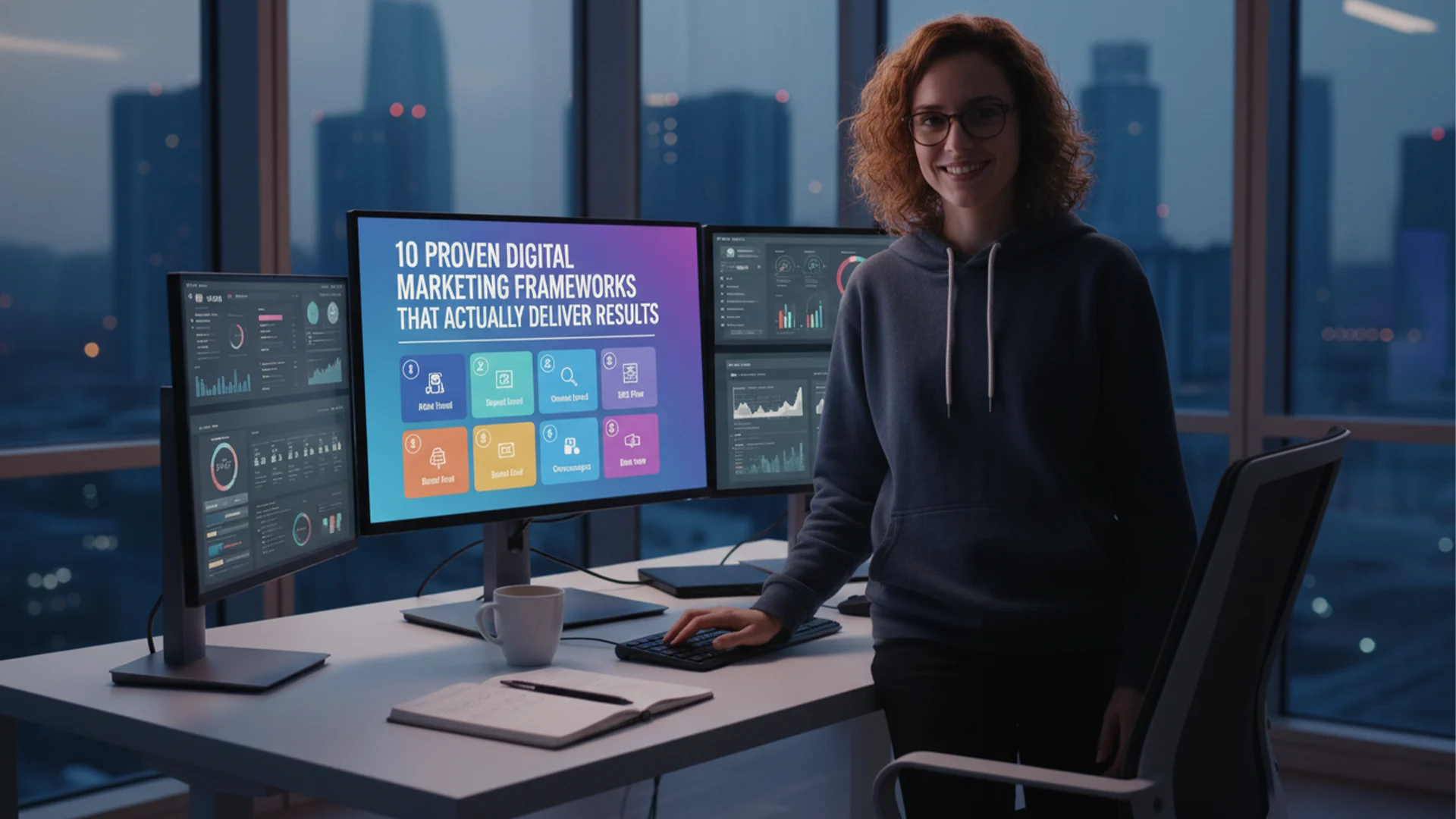
The world of digital marketing is very dynamic, and everything changes, but the principles of digital marketing strategy and structure never disappear. Good marketers do not have to mark in the dark, but use outlines.
A digital marketing framework is a blueprint that is used to plan, carry out, and measure campaigns. It provides guidance, keeps the company on the right path, and brings about uniformity in decision-making.
We shall discuss 10 effective digital marketing models that have continued to yield successful outcomes to companies across the globe, the same models that are applied by agencies such as Digitix to ensure that brands continue to grow more intelligently and sustainably.
1. The RACE Framework (Reach, Act, Convert, Engage)
The RACE framework is among the most feasible models of the entire customer lifecycle management that have been developed by Smart Insights.
It divides marketing into four major steps:
Reach: Build awareness and bring traffic in by means of SEO, advertising, and social media.
Action: Promote engagement – newsletter subscriptions, downloads, or otherwise.
Convert: Change leads into customers with conversion-driving landing pages.
Engage: Cultivate loyalty by emailing, community, and after-sales experiences.
The RACE model helps Digitix marketing to create campaigns that address the full funnel, from first touch to long-term brand advocacy.
2. AIDA Model (Attention, Interest, Desire, Action)
The AIDA framework is an enduring model of marketing that is used to trace the psychological steps that a client passes through before making a purchase.
Attention -Focus the attention of the audience with catchy headlines and graphics.
- Interest: Intrigue them with information that is important to them.
- Desire: Emphasize benefits and emotional stimuli that generate want.
- Action: This involves making them take action, be it buying, subscribing, or sharing.
Digitix applies AIDA in campaigns in order to create compelling messages that will effectively guide them to their awareness stage until conversion.
3. The Flywheel Framework
The Flywheel, which is popularized by HubSpot, is a replacement for the classic funnel. It does not end with a sale but works to build momentum by making customers promoters.
It is a framework that underlines three ongoing processes: Attract, Engage, and Delight. Having satisfied customers will turn into a promotion of your brand by default and help generate new growth.
Digitix uses the Flywheel idea by focusing on customer satisfaction and retention, which is one of the best marketing engines.
4. PESO Model (Paid, Earned, Shared, Owned Media)
Integration is the success of modern marketing. The PESO model assists brands in striking a balance between visibility and credibility across various types of media:
Paid media: Advertisements, sponsorships, and influenced partnerships.
Earned media: press, reviews, and backlinks.
Shared Media: Community, community engagement, and share.
Owned media: Websites, blogs, newsletters, and content.
Digitix uses the PESO model to develop omnichannel marketing strategies that will guarantee brand consistency and ROI.
5. The See-Think-Do-Care Framework.
This is a framework that was developed by Google Avinash Kaushik, and it subdivides audiences according to intent:
See: The widest audience, patrons who do not know your brand.
Think: Researching audiences and comparing solutions.
Do: Individuals who are willing to purchase or act.
Care: Loyal customers who can be advocates.
Digitix applies this model in aligning content and advertisement strategies with what users want to see to make sure that each touchpoint can be relevant.
6. The 5A Model (Aware, Appeal, Ask, Act, Advocate).
Marketing legend Philip Kotler created the 5A model so that it can capture the interconnected customer journey in the digital era.
It is concerned with the way awareness becomes advocacy.
Aware: Customers learn about your brand.
Appeal: They are interested and emotionally bonded.
Question: They want to know questions.
Act: They decide to buy.
Promoter: They give recommendations about your brand to other people.
The 5A model helps Digitix marketing to create storytelling plans that create emotional connections and turn customers into ardent supporters.
7. The SOSTAC 2 Planning Framework.
PR Smith developed SOSTAC, and it is one of the most successful strategic planning systems used by marketers. It makes sure to address every step, from planning to controlling.
Situation: Where are we now?
Goals: Where do we hope to be?
Strategic: The way to get there.
Tactics: What are our tools and means?
Action: Who, what, when?
Control: What is the intended measurement of results?
Digitix developed comprehensive, quantifiable planning through SOSTAC and ensured that no marketing effort was wasted.
8. The Growth Hacking Funnel (AAARRR Framework).
This model, which is alternatively known as Pirate Metrics, is a model of Dave McClure that concentrates on accelerating growth based on data and iterations.
The six stages are:
Awareness: Users learn about your brand.
Acquisition: Visitors become leads.
Activation Leads: Have your first time with us.
Retention: They come back time and again.
Referral: They make other people know about you.
Revenue: They bring in income.
Digitix incorporates AAARRR in performance campaigns, which leads to quantifiable growth in awareness and advocacy.
9. The Content Marketing Framework.
Digital marketing is based on content and is determined by process. An ideal content marketing tool consists of:
Research: learn customer needs and pains.
Create: Build valuable and optimized content.
Share: Publicity on the web, social, and email.
Measure: Monitor engagement and conversion statistics.
Optimize: How to continuously improve.
This is the process that the content strategies of Digitix pursue in order to make sure that all content is attractive, converting, and retaining customers.
10. The Digital Maturity Framework.
The Digital Maturity Framework measures the level of digital maturity of an organization in terms of technology, culture, data, and marketing performance.
Evaluation of existing capabilities helps the business to know the weak areas and areas to focus on improvement. The Digitix performs a digital maturity audit to assist the brands in shifting from reactive marketing to proactive growth to guarantee scalable and sustainable growth.
Why These Frameworks Work
Both these models are very clear and organized and assist marketers in remaining driven to what really counts: audience comprehension, quantifiable performance, and long-term growth.
Frameworks do not restrain creativity; they direct it. They enable teams to experiment, learn, and optimize ongoing, making marketing a science rather than a hunch.
Agencies do not strictly apply these established models like Digitix, but they use them as scalable instruments: They tailor these models under a brand’s objectives, audience behavior, and industry dynamics. That is why their strategies are so effective in providing real and measurable results.
Conclusion
Digital marketing is ceasing to be the art of trying it all but doing the right things in the right way. The ten models simplify complex strategies, align the teams, and direct the marketing activities toward results instead of strategies.
Regardless of whether you are creating a new campaign or working on a previous one, the ability to use these structures can help you become clearer, consistent, and make more conversions.
And in case you need professional assistance in applying them to your business, Digitix Marketing can be considered one of the most suitable agencies to develop data-driven and future-proof digital planning, which will actually achieve outcomes.
Frequently Asked Questions
1. What is a digital marketing framework?
A digital marketing framework is a systematic method of planning, implementation, and measurement of campaigns, focusing on consistency and improved performance in all channels.
2. What frameworks would provide the most effective results?
Models such as RACE, SOSTAC, AIDA, and PESO have been useful in developing holistic and result-based marketing plans.
3. Why go through an agency such as Digitix?
Digitix uses these frameworks strategically by integrating creativity, data, and technology to create highly effective campaigns that will be remembered.