The first several months of a pet’s life influence everything that comes after. Strong bones, quick thinking, healthy digestion, and a shiny coat start with proper nutrition. Good food is responsible for the majority of the heavy lifting. But often, growing pets need an extra hand.
That is where multivitamins help. Puppies and kittens grow fast. Their bodies change every week. They also burn more calories, build muscle quickly, and grow bones, teeth, and organs all at the same time. If nutrition fails during this period, the effects can be felt for years on their health. A good multivitamin can help cover those gaps and keep healthy, constant growth on track.
Why Early Nutrition Matters So Much
Young animals require more nutrients than can be provided by adult dogs. Their immune systems are also not as experienced in fighting infections. Their brains are developing. Their bones are strengthening by the day. With this intense growth and development, even small shortages can lead to weakness, slow growth, and low energy.
If a puppy doesn’t get enough calcium, their bones will be weak. A kitten with low iron might be tired and fail to grow. These problems may not be apparent immediately, but can become severe down the line.
A decent multivitamin helps the body as it expands. It is not instead of a healthy diet.
Key Nutrients Growing Pets’ Needs
A good early-development multivitamin is a combination of vitamins and minerals that support the entire body.
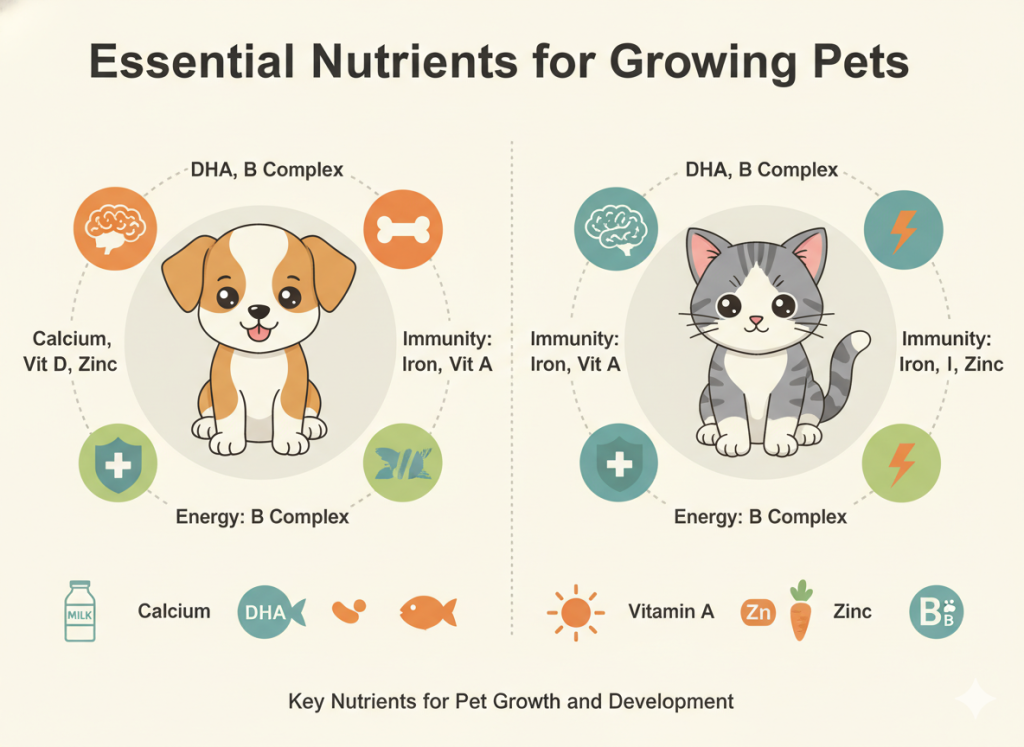
Here are the most important ones:
- Calcium and Phosphorus – Build strong bones and teeth
- Vitamin D – Helps the body absorb calcium properly
- DHA – Supports brain development and learning ability
- Iron – Helps form healthy blood cells
- Zinc – Supports skin healing and immunity
- Vitamin A – Supports vision and healthy growth
- B-Complex Vitamins – Boost energy and metabolism
Each nutrient plays a role. Together, they help your pet grow stronger and more active.
Brain Development and Learning Ability
Brain growth is very important in the first year. Puppies and kittens are quick learners at this age. They even recognize voices and understand training, creating memory patterns.
DHA is especially helpful here. It promotes healthy brain and eye development. When given enough DHA, animals whose basic needs are satisfied frequently exhibit improved performance during training. They are more focused and aware.
For example, many pet owners notice their puppies learn commands faster when their nutrition supports brain health.
Stronger Immunity in the Early Months
Pets are more susceptible to illness when young. Their immune systems are immature. During this critical stage, they will benefit from a balanced multivitamin.
And vitamins A, C, and E do help support your immune system. Zinc is also key to the body’s ability to heal itself more quickly. These nutrients enable young pets to fight off everyday infections and recover quickly.
This is particularly beneficial after vaccination, when temperatures and weather change, or after a pet moves.
Better Skin, Coat, and Overall Appearance
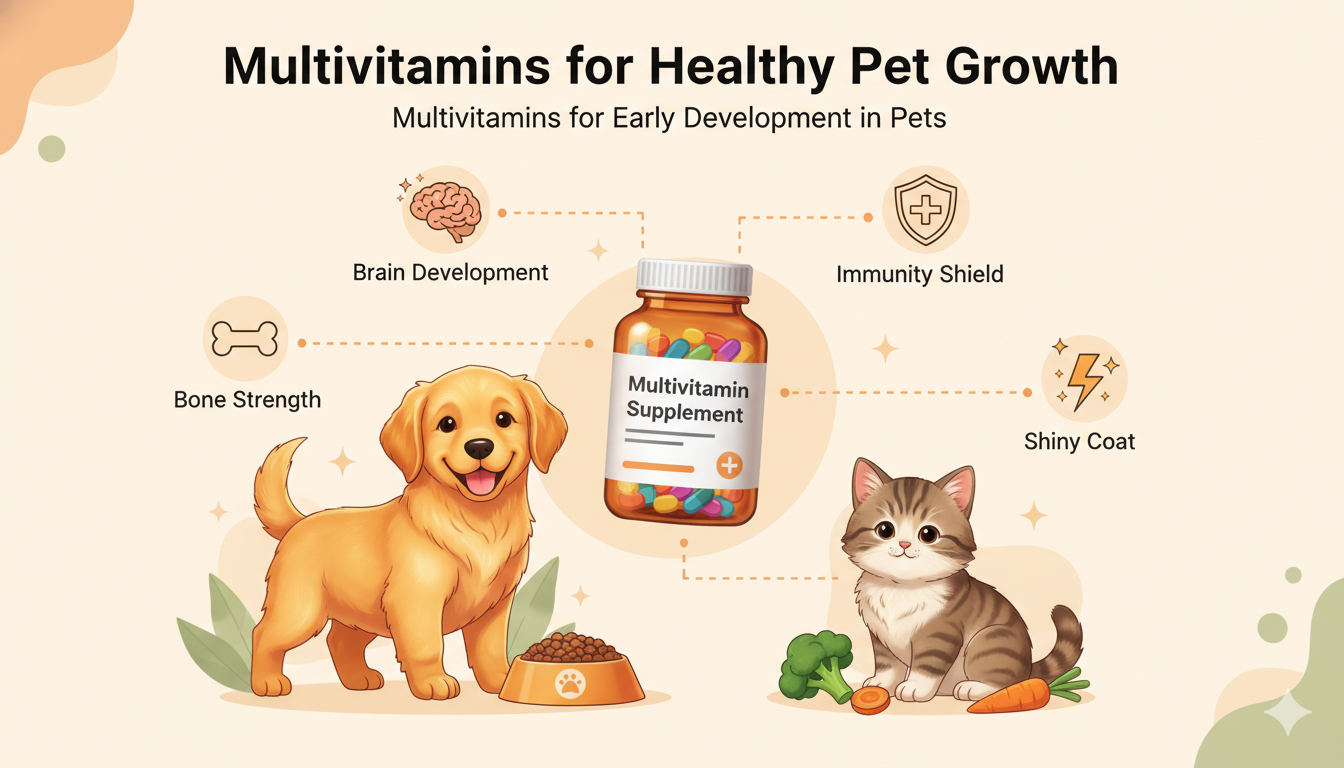
The allure of a shiny coat isn’t only aesthetic. It reflects internal health. Lack of Nutrition: If a pet isn’t getting the nutrients they need, their fur can appear dull or dry. Your skin may be itchy or flaky.
A multivitamin plus zinc, omega-3s, and vitamin E promotes a soft, shiny coat and healthy skin, possibly with balanced nutrition. For this reason, pets have a healthier appearance and feel better.
When Should You Start Multivitamins?
You can start supplements during early growth, but timing matters. Most vets suggest beginning after weaning, when pets start eating solid food regularly.
Multivitamins can help if:
- Your pet is a picky eater
- Growth seems slow
- Energy levels stay low
- The diet lacks variety
- The vet suggests extra support
Not all pets require daily supplements, though. There’s also the possibility that pets are already getting enough nutrients, especially if the food chosen is a high-quality balance of nutrients.
You should look for the best pet products for your pet, not necessarily what is a trend.
Avoid Over-Supplementing
In the case of supplements, more is not always better. An excess of calcium, for example, can be detrimental to the development of large-breed puppies’ bones. (A surplus of vitamins can also lead to digestive upset.)
This is why dosage matters. Always read the product guidance, and seek vet advice if unsure. And forget throwing a bunch of supplements together and hoping they’ll have good synergy.
Choosing the Right Multivitamin
Pet stores offer many options. Still, quality should come first.
Look for products that:
- Are made for puppies or kittens
- Show clear ingredient lists
- Have proper dosage guidelines
- Come from trusted pet brands
- Are vet recommended
Pet’s Station has amazing supplements perfect for growing babies. Products to meet the needs of growing pets from the very beginning, supporting them throughout puppyhood.
Supporting Growth with Daily Care
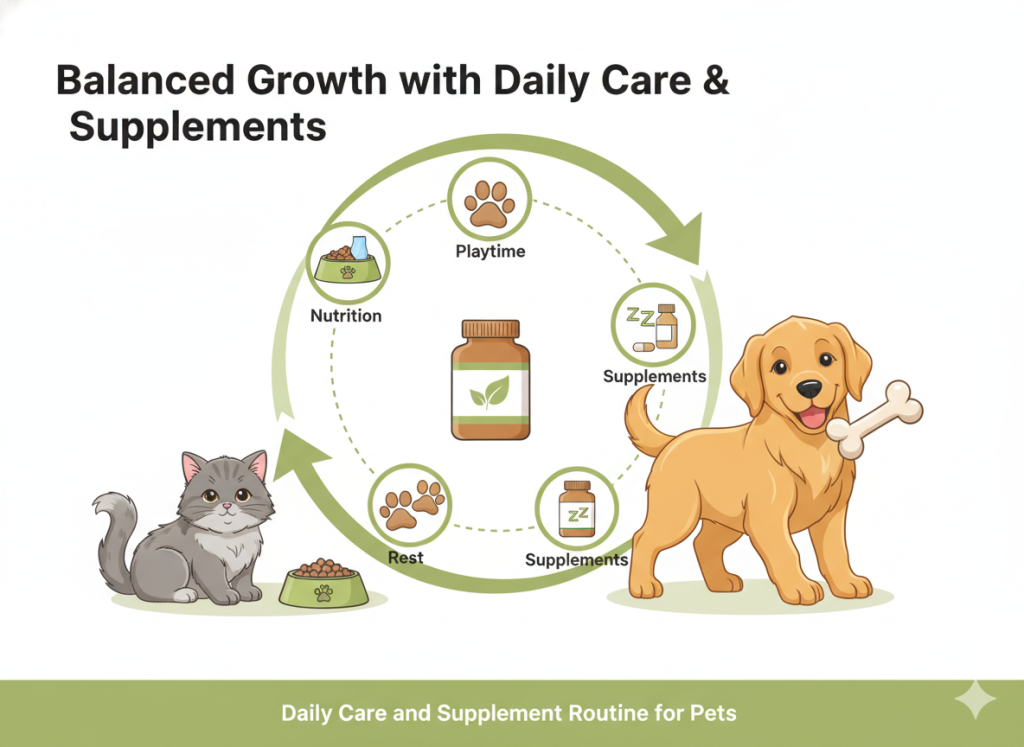
Multivitamins work best when paired with good daily habits. Make sure your pet gets:
- Fresh water at all times
- A balanced diet suited to age and breed
- Regular play and exercise
- Proper sleep and comfort
- Routine vet checkups
Just break the supplements into your pet’s bowl, and they’ll do the rest, helping them to become healthy adults.
Final Thoughts
The beginning of life is the beginning of everything. It all starts with good nutrition: strong bones, a sharp mind, and good immunity. Multivitamins can help with this growth by providing an extra boost to their diet.
Pets Station guarantees that young animals stay active, healthy, and vibrant when they are carefully chosen and used. Early support goes a long way in the decades to come.
FAQs
Not always. If your pet eats a premium and balanced nutrition food, they may already be getting what they need. After seeing a veterinarian, some picky eaters, pets that aren’t very sturdy, or breeds that grow quickly might benefit from a little extra help.
Most pets can start once they are weaned, typically after they have completely moved on to solid food. Be sure to read the product label for more information, though, and always ask your vet about this subject.
Yes. Too much of any supplement, in particular calcium for the big breeds, can result in growth or gut issues. And don’t take more than one supplement without talking to your healthcare provider, and make sure to use them as directed.
That depends on what they eat and whether they are healthy. Some animals require only assistance during early development. Others may receive benefits longer if prescribed by a veterinarian.
A dull coat, lack of appetite, low energy, or slow growth can all be signs that your kitten isn’t getting the nutrients she needs. A veterinary exam will help support good protein sources and determine if any supplements are needed.