The health and happiness of your pets are the leading priority of every pet owner. However, while exercise and a healthy diet are important, supplements can help your pet’s overall health. Such products as fish oil capsules and liquid fish oil supplements are the most popular and useful dog and cat supplements.
At Pets Station, we have realized that people who own pets care about the best for their furry companions. Thus, this guide clarifies the advantages, differences, and use precautions, as well as the safety of fish oil supplements in pets.
What Do Fish Oil Supplements Do to Pets?
Fish oil supplements are extracted from the bodies of fatty fish, including salmon, mackerel, sardines, and anchovies. They contain omega-3 fatty acids, mostly EPA (eicosapentaenoic acid) and DHA (docosahexaenoic acid), which are indispensable nutrients in human beings and animals.
Pets cannot get enough omega-3, so it has to be given in the diet or as supplements. Pets are provided with fish oil in two forms:
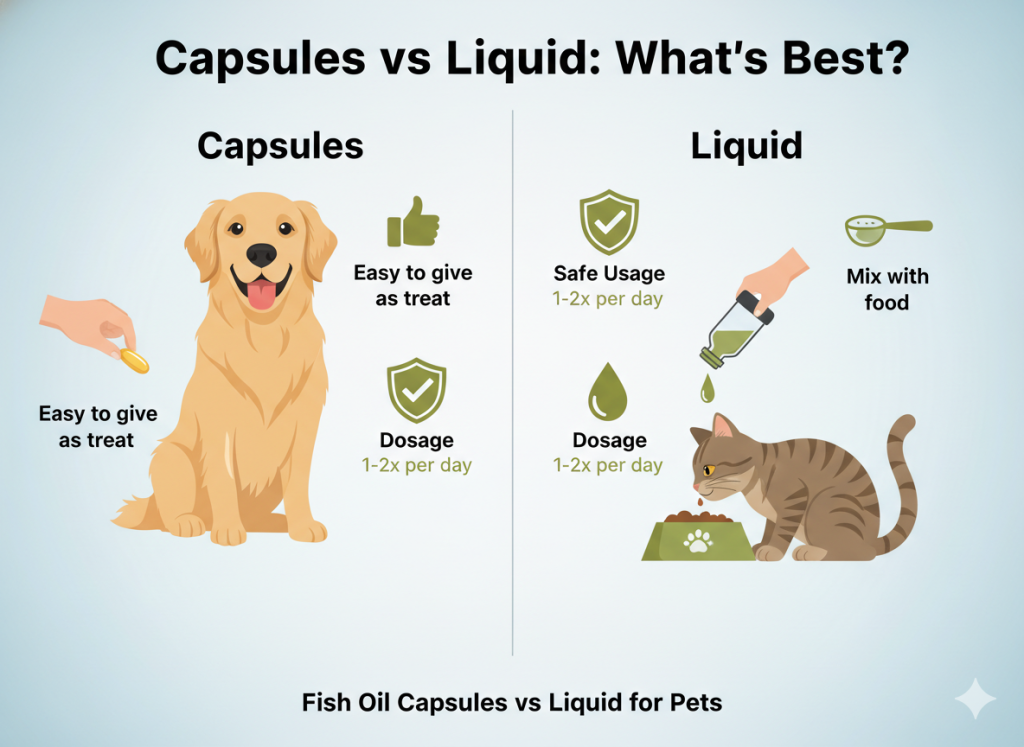
- Capsules: The capsule dose consists of pre-measured doses of gel or soft capsule.
- Liquid supplements: Oil, which may be placed in food or a dropper added.
It is in each form, which has its benefits, depending on your pet’s size and feeding habits.
Benefits of Fish Oil for Pets
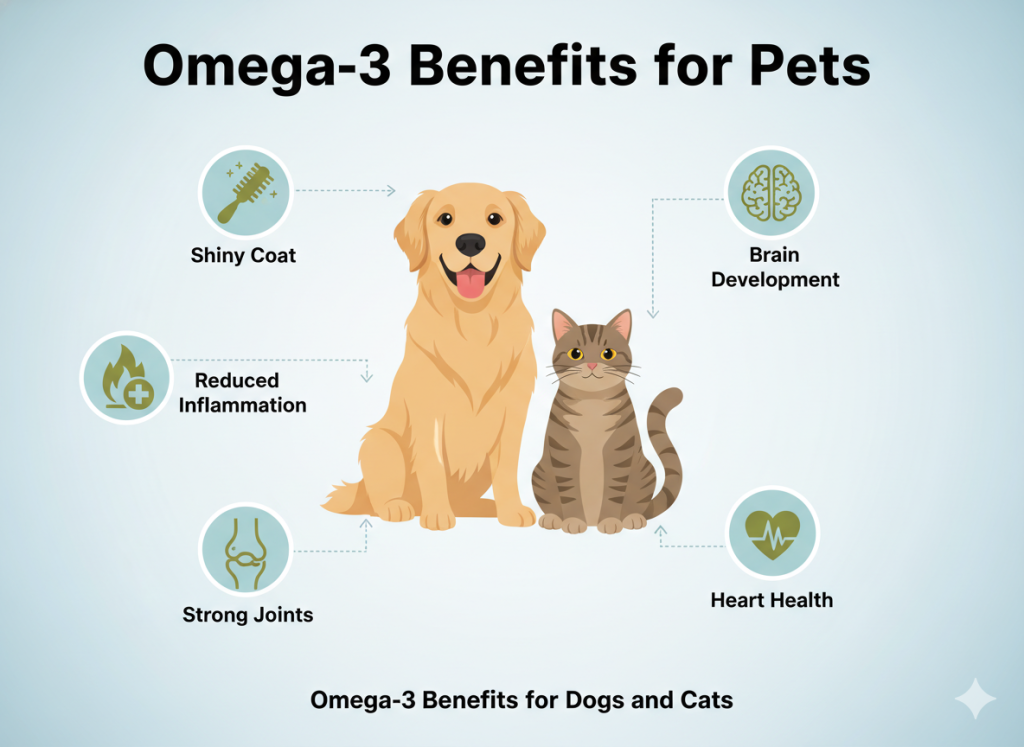
There are several health benefits of fish oil supplements for dogs and cats. As an example, they could make the coat healthy, strengthen joints, and make the brain healthier.
1. Promotes Coat and Healthy Skin
Pets that have dull fur, excessive shedding, or dry skin usually benefit from being given omega-3s. Fish oil helps:
- Take the inflammation away that leaves the skin itchy
- Enhance the shine of the coat and its plushness.
- Reduce the loss of hair due to skin irritation.
As a matter of fact, Pets Station often advises pets that have allergies or have skin sensitivities to fish oil. With time, grooming can be easier and more pleasant for both pets and owners when the regimen is supplemented on a regular basis.
2. Promotes Joint Health
Inflammation and stiffness may be experienced in older pets or those that are likely to have joint problems, such as Labrador Retrievers and German Shepherds. Fish oil contains omega-3 fatty acids that can be used to:
- Reduce joint inflammation
- Support cartilage health
- Enhance the mobility and comfort.
Moreover, according to most veterinarians, fish oil should be used hand in hand with some other joint supplements, including glucosamine or chondroitin, to maintain long-term joint health.
3. Supports Heart Health
Omega-3 fatty acids may be used to enhance cardiovascular health in pets by:
- Lowering the level of triglycerides
- Promoting normal blood pressure
- Improving circulation
This is particularly essential for breeds that are prone to heart disease or elderly pets.
4. Promotes Brain and Eye Development
In the case of puppies and kittens, fish oil DHA plays a vital role in:
- Proper brain development
- Eye and retinal health
- Cognitive function
Consequently, early supplementation has the potential to enhance learning, memory, and the development of the neurobiological system in general.
5. Helps Reduce Inflammation
Fish oil supplements can alleviate inflammatory disorders like allergies, arthritis, or skin issues. The anti-inflammatory ability of omega-3 fatty acids is inherently natural, and it serves to soothe swelling and pain in animals.
Capsules or Liquid Fish Oil: Which Is Better?
The question of whether to use capsules or liquid supplements depends on the needs and personality of your pet and lifestyle.
Fish Oil Capsules
Pros:
- Ready-made doses no guesses
- Easy to store and transport
- Long shelf life
Cons:
- Some pets do not like swallowing capsules
- Difficult to manipulate the dose for small and large pets
Tips:
- Cover pills in cookies or blend with soft food
- Opened capsules should be opened carefully, but mess or oxidation should be avoided
Liquid Fish Oil
Pros:
- May be placed directly on the food
- Adjustable dose based on the size of the pets
- Easily absorbed into the blood
Cons:
- Refrigeration is required in certain instances
- Has a very strong fishy smell to which pets are averse
Tips:
- Mix the oil well into the food
- Begin with low quantities to get pets used to the taste
- Be careful and use a dropper or a measuring spoon
In general, liquid fish oil is commonly prescribed to picky eaters or pets that require a flexible dosage, whereas capsules will be effective when patients can swallow pills easily or give them as treats.
Giving Fish Oil to Your Pet
When administered correctly, there are no side effects to your pet as it gets to enjoy all the benefits of fish oil.
1. Determine the Right Dose
Dosage depends on:
- Pet size and weight
- Age
- Health condition
As a general guideline:
- Dogs: 20–55 mg of EPA + DHA as a combination divided by the body weight of the animal
- Cats: 30 mg of EPA + DHA integrated in each 1 kilo of body mass
Nevertheless, you should always ask your veterinarian for the correct dosing, especially when the pet has health conditions.
2. Introduce Slowly
Add fish oil slowly to prevent intestinal discomfort:
- Begin with a half dose
- Observing vomiting or diarrhea
- Gradual rise to full dosage in a few days
3. Incorporate Into Meals
- Wet food or a treat can contain capsules
- Oil in the form of a liquid may be added directly to the food
- Some pets might take oil applied to dry kibble
4. Storage
- Store fish oil in a dark, cool place
- Liquid supplements should be refrigerated (when instructed on the label)
- Exposure to heat or sunlight should be avoided, as this may destroy omega-3s
Fish Oil May Have Side Effects
Although the use of fish oil is usually safe, excessive supplementation may lead to problems:
- Loose stools or diarrhea
- Fishy odor on breath or skin
- Rarely, nausea or vomiting
- Very high doses cause blood thinning
The best ways to overcome these issues are to follow the prescribed dose, separate daily portions of fish oil into smaller ones, and take quality fish oil, which has been purified and is from reputable brands.
Selecting the right fish oil supplement
The quality is important when getting fish oil as a pet food. For instance, consider:
Purity: Find out which supplements are tested for heavy metals and toxins.
Focus: Be sure to look at EPA and DHA per serving, and not the total fish oil.
Freshness: Fish oil is oxidizable. Find products that contain antioxidants such as vitamin E.
Configuration: Select liquid or capsule depending on your preferences and the requirements for your pet.
At Pets Station, we just stock the reputable brands that are safe and effective.
Different Pets Fish Oil
Dogs
Benefits: skin, coat, joints, heart, and immune system.
Appropriate for any age: puppies, adult dogs, and seniors.
Critical to breeds that are susceptible to joint or skin complications.
Cats
Benefits: The skin, coat, brain, and immune system.
Cats are mostly preferred in liquid forms.
Helps decrease hairballs and enhances the shininess of fur.
Small Pets
Omega-3s may also be helpful to some small animals, such as rabbits or guinea pigs.
Administer with the advice of a veterinarian.
Taking Fish Oil in Combination With Supplements.
Fish oil may be used as a supplement to other supplements. For example:
Glucosamine and Chondroitin in joint health.
Probiotics for gut health.
Multivitamins a well-rounded health pill.
These combine to give a complete picture of the health of your pet, particularly the older pets or those with chronic illness.
Indications That Your Pet Could Use Fish Oil
Dry, flaky skin or dull coat
Excessive shedding
Pain or resistance to physical activity
Skins or allergies
Old-age pets with mental problems
Health issues like heart or kidney problems
Keep in mind that when you observe any of these symptoms, you can also add some fish oil supplements and ask your veterinarian about a specific strategy.
Why Pets Station should be used as a distributor of pet supplements
Pets Station is concerned with the health and safety of your pet. Our fish oil supplements and liquid enteric are:
High-quality and purified
Safe and potent dose tested.
Fits dogs, cats, and small pets.
Supported by the professional recommendations of the veterinarians.
In addition to that, we will be trying to simplify, make it effective, and make it trustworthy for pet wellness.
Conclusion
Fish oil supplements in capsules or liquid are an easy and efficient method of maintaining the health of your pet. Omega-3 fatty acids are important nutrients for all pets, as they promote the functions of the skin and coat and the supportive functions of the joints, heart, and brain.
In addition, proper selection of the form, dose, and quality of the supplement is the only way to be sure that your furry friend gets as many benefits as possible without possible harm. We have known fish oil products at Pets Station, and we offer expert advice in order to ensure your pets are able to live a long, healthy, and happy life.
Get your pet off to a healthy start with quality fish oil supplements at Pets Station.
FAQs
No. Fish oil supplements do not substitute for a balanced diet. They boost the nutrition of your pet by supplying them with omega-3 fatty acids, which are vital to the health of pets, yet pets also require quality food that contains high amounts of protein, vitamins, and minerals.
The effects of dog supplementation with fish oil are different and depend on the condition and age of your pet. The improvement of the coats and the skin can be observed in 4-6 weeks, and the joint support, cognitive, and overall health improvements are usual after 2-3 months of regular use.
Liquid fish oil may be a more convenient option for picky food eaters since it can be added directly to food. Some pets that swallow pills or even treats easily are good with capsules. This should be based on how your pet eats and also on your convenience in administering the supplement.
Yes. Fish oil can be used in young pets, though in the right dosage. DHA helps brain and eye development in puppies and kittens, as well as improves cognitive development and vision. Nevertheless, it is always best to consult your veterinarian in order to know which dose is age-appropriate.
Choose fish oil supplements that manufacturers test for heavy metals and toxins, clearly label EPA and DHA content, include antioxidants to prevent rancidity, and come from well-known brands. Good-quality supplements are safe, effective, and provide optimal benefits to the health of your pet.