Many businesses start with ready-made tools. Spreadsheets, basic accounting software, and simple CRM platforms work well in the beginning. They help teams organize work and manage daily tasks. But as a company grows, those tools often show their limits. Processes become slow. Data sits in different systems. Employees spend more time fixing problems than doing real work.
This is the point at which many businesses begin considering custom software. Not because they want something fancy, but because they need systems that actually match how their business works. Companies working with technology partners like Newton Byte often realize that the right custom solution can remove daily friction and help teams work smarter. Let’s look at the clear signs that your business may need custom software.
Your Team Is Still Doing Too Much Work Manually
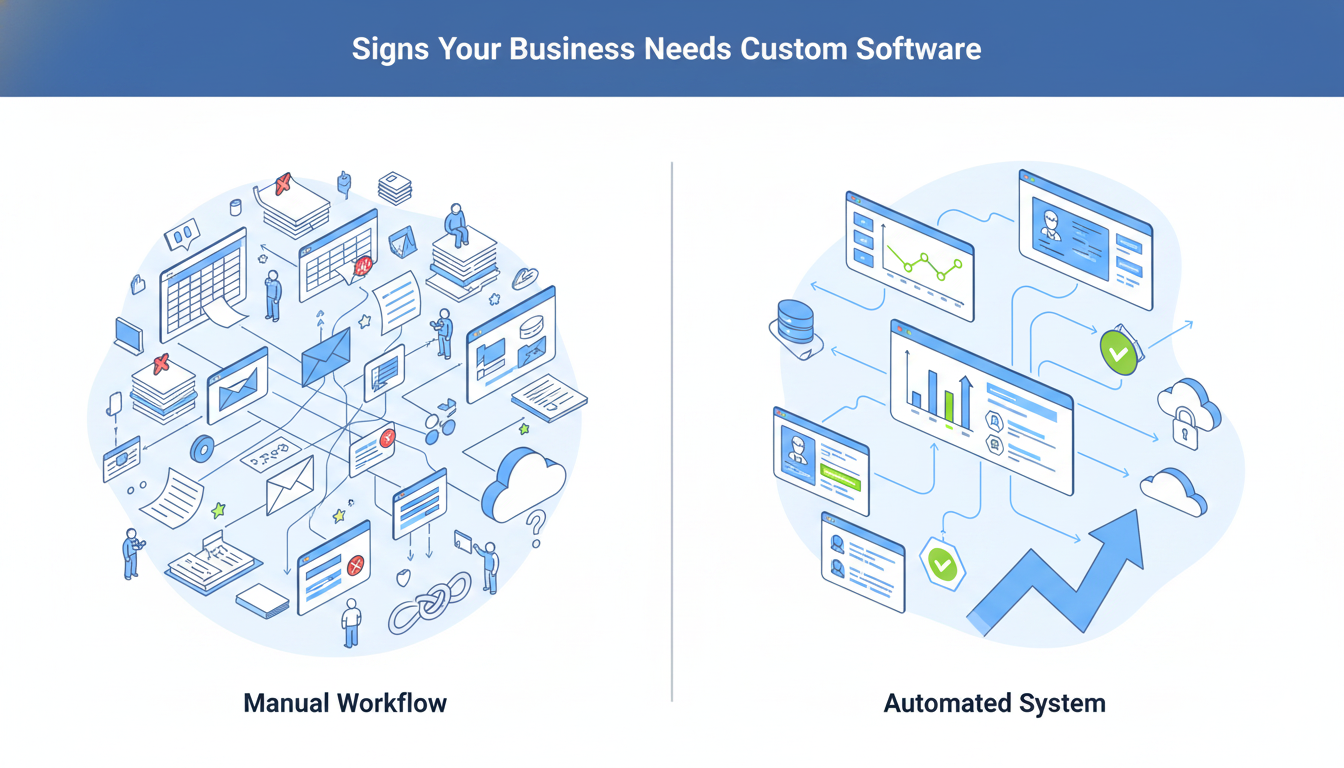
One of the greatest productivity killers in increasing businesses is manual work. Assuming that your employees are transferring data between systems, doing spreadsheet updates all day, or repeating the same task over and over again, there is something wrong with the workflow.
As an illustration, a sales department might be managing leads in a different system and invoices in another. Whenever one makes a deal, someone must move that information by hand.
That wastes time. It also facilitates the occurrence of errors. All these can be automated through custom software. The system interrelates the tools that are available to your team and transfers information automatically. Your staff uses less time on mundane activities and is engaged in productive activities.
Your Current Software Doesn’t Fit Your Process
The software that is off-the-shelf is generally in use. It attempts to serve thousands of businesses simultaneously. However, all companies operate in different ways. A logistics organization is run in a different manner than a retail store. The workflows of a real estate firm are highly different than the workflows of a healthcare provider.
When your existing software has you and your team modifying the process to get the system to work at all, it is a definite indicator that you need software that has been designed to serve your business. Custom software integrates with your workflow rather than changing your workflow so that it fits the software.
You Use Too Many Separate Tools
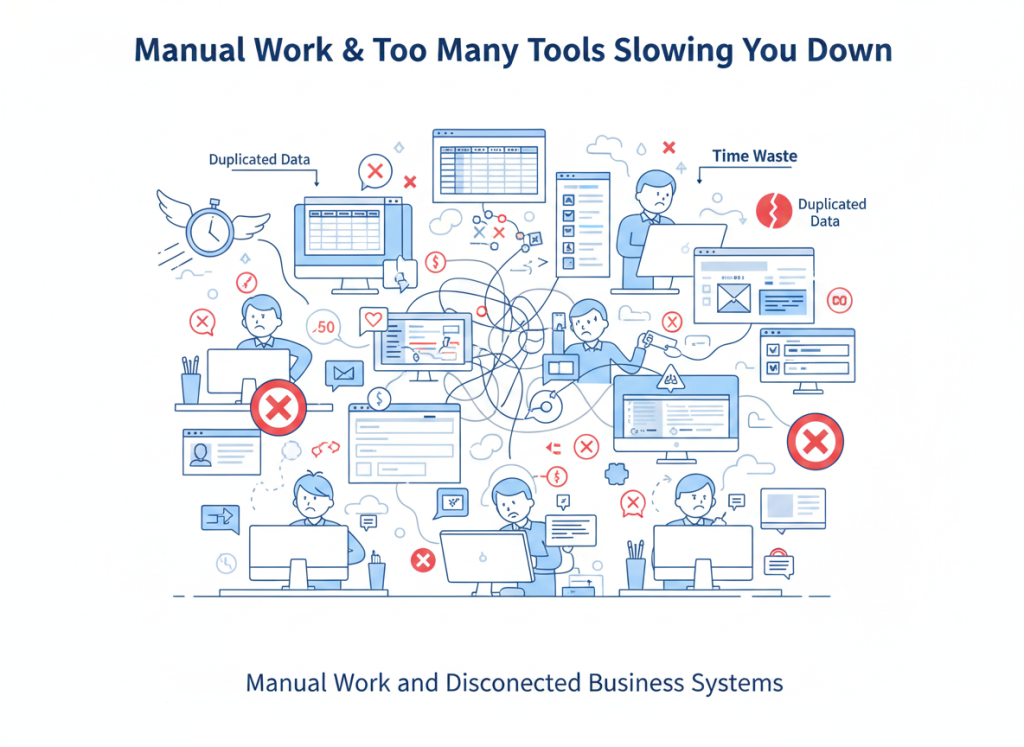
Many businesses rely on multiple platforms. One tool for accounting, one for sales, one for project management, and one for communication.”
At first, this seems manageable. Over time, it becomes chaotic. Employees jump between systems all day. Data gets duplicated. Information becomes difficult to track. A custom platform can connect these systems into one unified environment. Everything becomes easier to manage because the information flows through a single structure. Businesses working with Newton Byte often choose this path when they want to simplify operations and bring different systems together.
Your Business Is Growing, but Your Systems Cannot Keep Up
Growth is exciting. But it also exposes weaknesses in old systems. A process that worked for ten employees may fail when the company grows to fifty. For example:
- Customer requests increase
- Orders grow rapidly
- Inventory becomes harder to track
- Data volume expands quickly
If your systems slow down when your business grows, that creates real operational risk. Custom software is designed with scalability in mind. It grows with the company instead of holding it back.
You Struggle to Get Clear Business Insights
Many businesses collect data but cannot actually use it. Sales numbers live in one system. Marketing data sits in another. Financial reports come from a completely different platform. When leaders need answers, they spend hours gathering information from different places. This makes decision-making slow and uncertain.
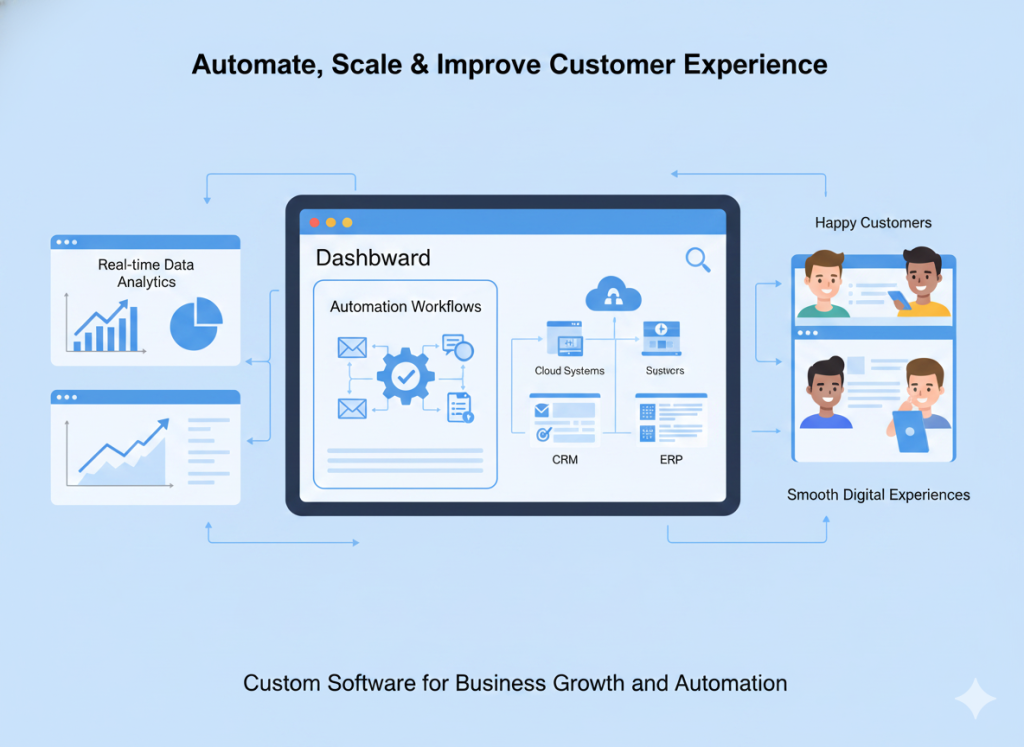
Custom software can centralize business data and present it in clear dashboards. Managers see what is happening in real time. Better visibility leads to better decisions.
Your Customers Expect a Better Digital Experience
Customer expectations have changed. People expect fast, simple, digital experiences. They want:
- easy booking systems
- smooth online purchases
- clear order tracking
- fast support
If your systems cannot deliver these experiences, customers may choose competitors who can. Custom software allows businesses to create customer experiences that match their brand and their market. For example, a retail business might build a custom ordering system. A service company may create a client portal for easier communication. These improvements strengthen relationships with customers.
Security and Data Control Are Becoming a Concern
When businesses rely on many third-party platforms, controlling sensitive data becomes harder. Customer information, financial records, and operational data may sit in different systems owned by different vendors. That creates security risks.
Custom software gives businesses stronger control over how data is stored and managed. Security features can be designed specifically for the company’s requirements. For organizations dealing with sensitive information, this control is extremely important.
Your Competitors Are Becoming More Efficient
Sometimes the strongest sign comes from the market itself. Competitors may deliver faster service. Their systems respond more quickly. Their operations run smoothly while others struggle with delays. Often, the difference is technology.
Companies investing in tailored software solutions gain operational advantages that generic tools cannot provide. That does not mean every business needs complex systems. But it does mean technology must support business strategy.
How Newton Byte Helps Businesses Build the Right Software
Building custom software requires more than coding skills. It requires understanding how businesses operate. The team at Newton Byte works closely with companies to study their workflows, identify problems, and design systems that solve real operational challenges. Instead of forcing businesses into pre-built platforms, Newton Byte develops solutions that match the way each organization works. Their services include:
- custom business software development
- workflow automation systems
- business platform integration
- cloud-based applications
- scalable digital solutions
The goal is simple. Build technology that removes obstacles and allows businesses to operate with clarity and speed.
Final Thoughts
Custom software is not used by businesses as they seek something simple. They do it as they have tools that prevent them from growing further. Manual work increases. Systems lose their connection. Information is more difficult to handle. At that point, a properly designed bespoke platform can entirely transform the way a business works.
It streamlines operations, enhances communication, and provides superior working conditions to the employees and the customers alike. When your business is showing these indications, it is possible to consider revising the tools you tend to use. Custom software can be one of the most potent investments your company makes with the appropriate technology partner.
FAQs
Custom software is a system that is tailored to the needs of a firm. It integrates with the business workflow, unlike the pre-built tools, and it is also used to automate unique organizational processes.
A company must look into custom software in case of a rise of manual work, the confusion caused by multiple systems, or a lack of support for the current tools with the growth and operational requirements.
The price varies according to the functions and the sophistication of the system. Nevertheless, most companies realize that bespoke software is less costly in the future since it enhances efficiency and requires less manual labor.
The amount of time taken to develop differs according to the size of the project. Small systems can be developed in a matter of weeks, whereas larger platforms can take several months to be fully developed and tested.
Newton Byte engages with companies to make sense of their operations and develop software to address actual issues in operation. They are long-term oriented solutions that are automation, integration, and scalable technology.