Understand how artificial intelligence is transforming business processes and decision-making. Get the acquainted with the world’s benefits, issues, and how Newton Byte takes the lead.
Artificial intelligence (AI) is not a fantasy anymore. AI is actively changing business operations, decision-making processes, and workflow management. Because, this change is paramount to organisations that desire to expand and become effective. This paper explains how AI is changing business practices and decision-making, its benefits and drawbacks, and why an agency like Newton Byte is a good choice among organisations that are willing to change.
1. The usefulness of AI in business operations
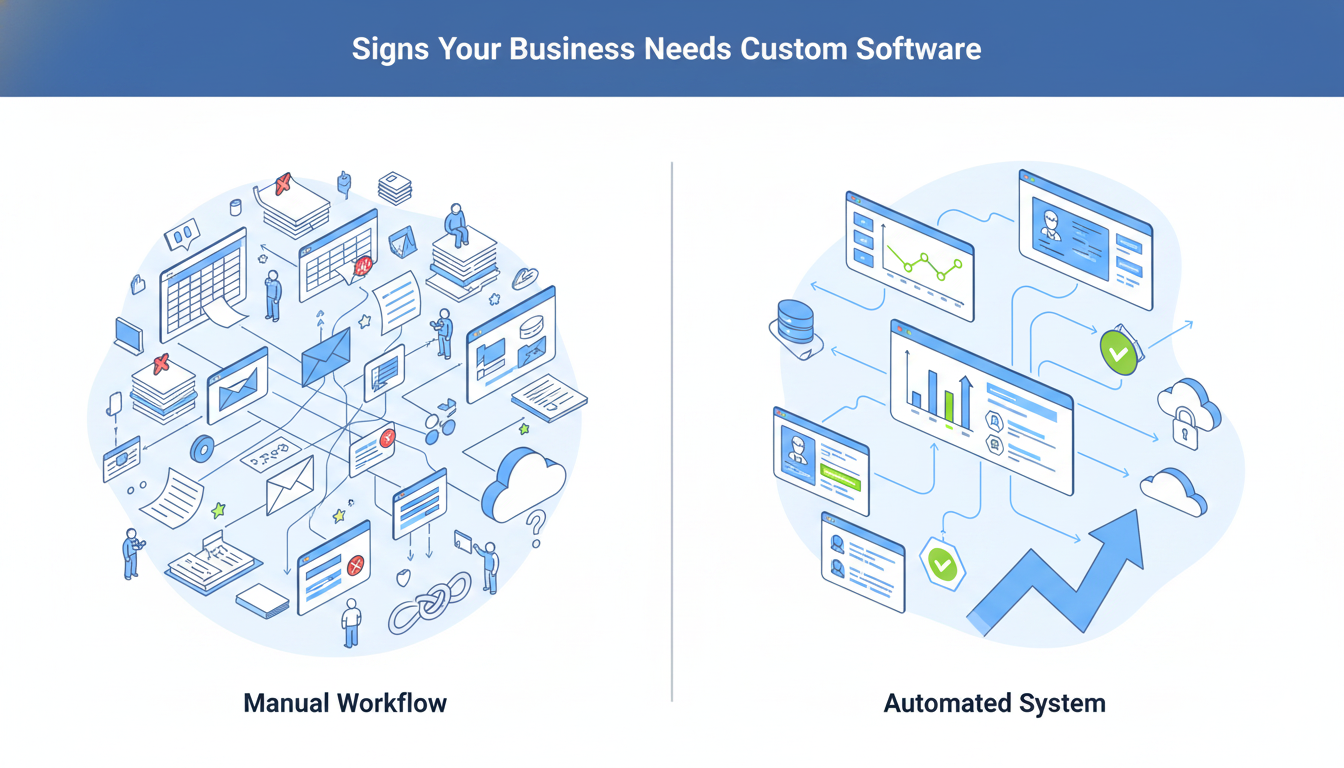
AI also allows easier automation of the repetition of work and operations, and the relieving of groups of people of work on strategy. The workflow automation grounded in AI can be cited as an example to be employed to monitor real-time information, detect trends, and offer recommendations.
Workflows become more flexible and receptive to changes. When AI is integrated into them and Dynamically, processes that were formerly controlled manually become dynamic.
How this will look in the real world: automation of task routing, anticipatory notifications, faster approvals, and fewer bottlenecks.
2. Artificial intelligence and the future of decision making
Traditionally, decision-making has been tedious, paper-based based and limited. So, With AI, businesses will be capable of estimating enormous volumes of data within a relatively brief timeframe to notice trends that could potentially go undetected by humans, and make better decisions.
AI is bringing forth predictive analytics. Businesses can make predictions, identify risks, and change strategy more quickly.
It is, however, devoid of human judgment; it improves it. The most effective outcomes occur in cases when AI and human beings cooperate.
3. Key benefits of AI-based processes and decisions
Speed and agility: One may make decisions that otherwise would have required days or weeks in a couple of hours or minutes.
Insight: AI assists in discovering all patterns, from which more informed decisions can be made.
Operation efficiency: Workflows remove many manual operations, which reduces errors and costs.
Scalability: AI-enhanced workflows can be replicated as the business scales. And has to expand without scaling human labor.
Innovation enablement: Routine work is handled, and the teams can focus on innovative projects and new business models.
4. Challenges and problems to monitor
Here’s where caution matters:
The quality and governance of AI are as good as the data on which it is based. Poor data derails outcomes.
Ethics and bias: The actions taken by AI are to be open and objective.
Human control was necessary: AI may be recommended, but humans must prove it. Complete automation has the potential to be unregulated.
Change management: There is a high expense in terms of time and organisational buy-in to invert the workflow and culture of decision-making.
Difficulty of integration: The technical and tactical aspects of integrating AI in existing workflows may be challenging.
5. Best practices of applying AI in workflow and decision making
Start with a purpose: Find out what the AI-benefitting workflows and decisions are.
Preparation of data: The data should be prepared, cleaned and reliable data.
Make ruling systems and morality: Moreover, Who is to be held responsible, how shall discrimination be checked, and how shall results be monitored?
Integrate AI with human functions: Additionally, AI may be analyzed and recommended, and human functions may be judged and put into perspective.
Control and repeat: Score, optimization, refine processes. AI isn’t “set-and-forget.”
Seek expert help where needed: Co-operation can be done with an agency that specialises in the implementation of AI to accelerate value and minimise risks.
6. Why Newton Byte is the agency of choice
Suppose that your business is already ready to embrace AI, but you do not know where to begin. Newton Byte has an outstanding record of assisting organisations in changing direction. Therefore, the focus on how AI can be incorporated into your strategic goals, and processes and decision-making are streamlined in the process. So, the humanistic approach they have is that they do not believe AI is a silver bullet; they help to use it reasonably and responsibly.
Conclusion
AI Powered is changing our working environments, decision-making, and competitive practices. AI delivers agility, intuition, and efficiency when businesses implement it correctly in their processes and decision-making. However, success depends on building the right foundation—strong data, clear governance, and effective human-machine collaboration. Therefore, when you decide to transform your business, partnering with an agency like Newton Byte ensures you implement AI properly, not just use it.
FAQs
Q1: Is it possible to remove human decision makers with the help of AI?
No. Human judgment is essential, although AI can assist in automating and aiding many decisions because of its context, morality, and uncertainty.
Q2: What are the best workflows supported by AI?
Good candidates are workflows that are data-intensive, repetitive, rule-based, and that have quantifiable outcomes.
Q3: How much time would it take to reap the benefits of AI?
It is different, although the majority of organisations have already achieved tangible improvements within several months. As long as the data will be process basis is established. Automation of certain tasks is often used to gain an early advantage.
Q4: What are the major risks associated with AI applications in decision-making?
Biased outcomes, poor data quality, a lack of transparency, and inadequate human control. So, the strategic goal compliance are the key risks.
Q5: What do we do to achieve AI success in both workflow and decision-making?
Set significant performance measures (KPIs) such as reduction of the processing time, utilization of fewer errors, improvement of customer satisfaction, reduction in decision making, and payback of investments. Then, follow fashion and change.