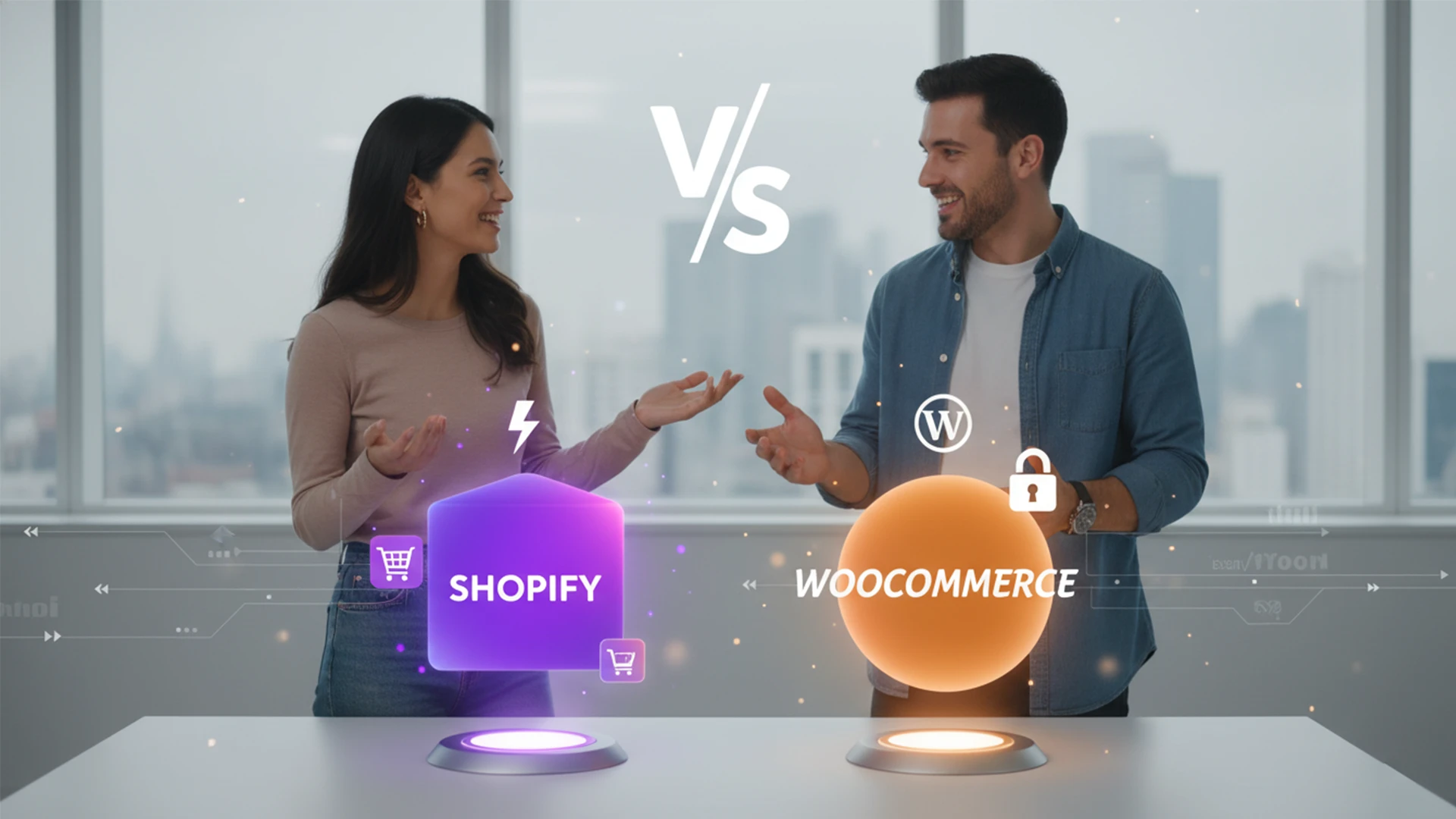
Choosing an eCommerce platform can make or break your business, especially if you plan to sell internationally. In 2025, Shopify and WooCommerce will be the two most popular online retailers.
Both are dynamic, powerful, and millions of people trust them. However, if you want to grow globally, one platform might be more appropriate than another. In this guide, we’ll compare Shopify and WooCommerce and help you decide which is more easily scaled to fit a global brand.
Shopify vs WooCommerce: Quick Overview
Let us first find out what each platform has to offer before going into details.
Shopify is a hosted eCommerce platform that is all-in-one. Everything, hosting, security, and support, is all under one roof. Due to this fact, it is simple to operate and great for beginners.
WooCommerce is a WordPress plug-in, however. It provides you with greater design and functionality control. But it also implies that you need to take care of hosting, updating, and security on your own.
In short:
- Shopify = Simplicity and speed.
- WooCommerce = Flexibility and full control.
But how do they perform when your brand starts growing globally? Let’s find out.
Ease of Use and Setup
When it comes to ease of setup, Shopify is the winner. It provides automatic updates, S/SSL, and hosting. Without knowing any code, you can open a store in a few hours.
In contrast, WooCommerce requires a bit more. You will need to install WordPress, buy hosting, and install the WooCommerce plugin manually. It takes a lot of time and technical knowledge, but it’s not hard.
Shopify’s plug-and-play system saves time for international brands looking to launch their businesses quickly in a variety of markets. Although WooCommerce is adaptable, if you lack technical support, it could slow your growth
Scalability and Performance
Scalability means that as your website grows, it will be able to handle more orders, traffic, and products. Shopify is designed to grow. Shopify is in charge of server performance and uptime because it is a hosted solution. As your traffic grows, the platform automatically adapts. Neither speed nor servers is an issue.
However, WooCommerce is your hosting policy. You will need to change servers or upgrade your plan as your store expands. It indicates that scaling is possible, but you will have to do it alone. When it comes to a brand that expects rapid expansion, Shopify’s managed structure is easier to scale and faster.
Global Selling and Multi-Currency Support
Selling worldwide requires strong localization features. You need currency conversion, multiple languages, and regional tax options.
Shopify has built-in tools for international selling. Shopify Markets, for example, lets you manage different regions, currencies, and even local pricing from one dashboard. It also supports over 130 currencies and integrates with major payment gateways worldwide.
WooCommerce also supports global selling, but you’ll need plugins such as WPML for translation and Currency Switcher for multi-currency features. While these tools work well, managing multiple extensions can become complex over time.
Therefore, if you want a simple, centralized system for international growth, Shopify takes the lead.
Payment Gateways and Transaction Fees
Payment flexibility is essential for worldwide growth.
PayPal, Apple Pay, Google Pay, and Shopify Payments are just a few of the more than 100 payment gateways that Shopify accepts. However, Shopify charges additional transaction fees when using a third-party processor.
Transaction fees are not imposed by WooCommerce. It includes hundreds of options, including Square, PayPal, and Stripe. It is simple to add region-specific options as well.
WooCommerce is therefore somewhat better in terms of cost adjustment and preventing extra fees. However, most brands can use the built-in features of the Shopify platform to simplify and speed up international payments.
Customization and Design
One advantage of WooCommerce is its design flexibility. Because it’s built on WordPress, you can customize every area of your store. You can change the code of your website to create a unique branding, and there are thousands of premium and free themes available.
Beautiful templates are also available on Shopify, though there is less customization than with WooCommerce. Although layouts, colors, and fonts can be changed, more complex changes will require Shopify’s third-party apps or the Liquid code language.
In summary, Shopify presents itself with ease of design, while WooCommerce presents itself with creative authority. Choose based on your team’s technical expertise.
SEO and Marketing Tools
WooCommerce will integrate well with WordPress, the most SEO-friendly content management system in the world. Yoast SEO is one of the plugins that can be used to manage schema data, meta descriptions, and keywords.
Additionally, Shopify has strong SEO. It automatically controls mobile optimization, SS, and site speed. However, WooCommerce offers more control over technical SEO settings.
Shopify’s marketing features include integrated social media, email, and advertising. The same is true for WooCommerce, where you will need to install plugins in order to integrate services like Google Ads and Mailchimp.
Both platforms are very good at marketing, but WooCommerce has a little more flexibility when it comes to SEO.
Cost and Value
Shopify’s basic plan starts at about $39.00 a month. Advanced levels have lower transaction costs, better analysis, and more staff plans. However, as you develop, you will also purchase apps and themes.
Installing WooCommerce is free, but you will need to pay for domain names, hosting, and other add-ons. Depending on your configuration, the costs vary. If you are a productive hosting user, WooCommerce may end up being less expensive over time.
As a result, WooCommerce is better for brands that want to control their own spending, while Shopify is great for consistent pricing and quick growth.
Customer Support
Shopify offers 24/7 customer support by phone, email, and chat. Teams working in different time zones around the world will greatly benefit from this.
Your hosting provider and the plugin developers are in charge of WooCommerce support. The community is important, but getting help will take longer.
When operating worldwide, Shopify’s all-in-one support system is more reliable and faster.
FAQs: Shopify vs WooCommerce
1. Which platform is easier for beginners?
Shopify is easier to set up and manage. WooCommerce requires more technical steps.
2. Which platform scales better for large global brands?
Shopify scales faster with less effort because it handles hosting and server performance automatically.
3. Which is better for SEO?
WooCommerce offers more flexibility for SEO since it’s built on WordPress.
4. Is WooCommerce cheaper than Shopify?
It can be, but costs depend on hosting and plugins. Shopify’s pricing is simpler but may be higher long-term.
5. Can I sell in multiple currencies?
Yes. Both platforms support it, but Shopify makes it easier with built-in tools.
Conclusion: The Best Platform for Global Growth
So, which platform scales better for global brands, Shopify or WooCommerce? Shopify is a better option if you want quick setup, simple management, and robust global tools. It’s ideal for expanding brands that require speed and dependability. However, WooCommerce offers you the freedom to create just what you require if you value control, customization, and reduced long-term expenses. Your decision ultimately comes down to your goals, team, and budget. Shopify provides a more seamless route to global expansion for the majority of global brands in 2025.