The change to cloud hosting is more than ever before. Speed, flexibility, and security are the new requirements of businesses. Because of this, edge computing and multi-cloud computing are the way of the future. At Newton Byte and Digitix Marketing, we help businesses adapt to these new cloud technologies with smart strategies.
Conventional cloud hosting is not sufficient any longer. Businesses desire to have more control, reduced risks, and accelerated performance. As a result, many cloud providers and data that are closer to customers are the focus of current cloud strategies.
This article explains what multi-cloud and edge computing mean. It also shows why both matter for future-ready businesses.
What Is Multi-Cloud Hosting?
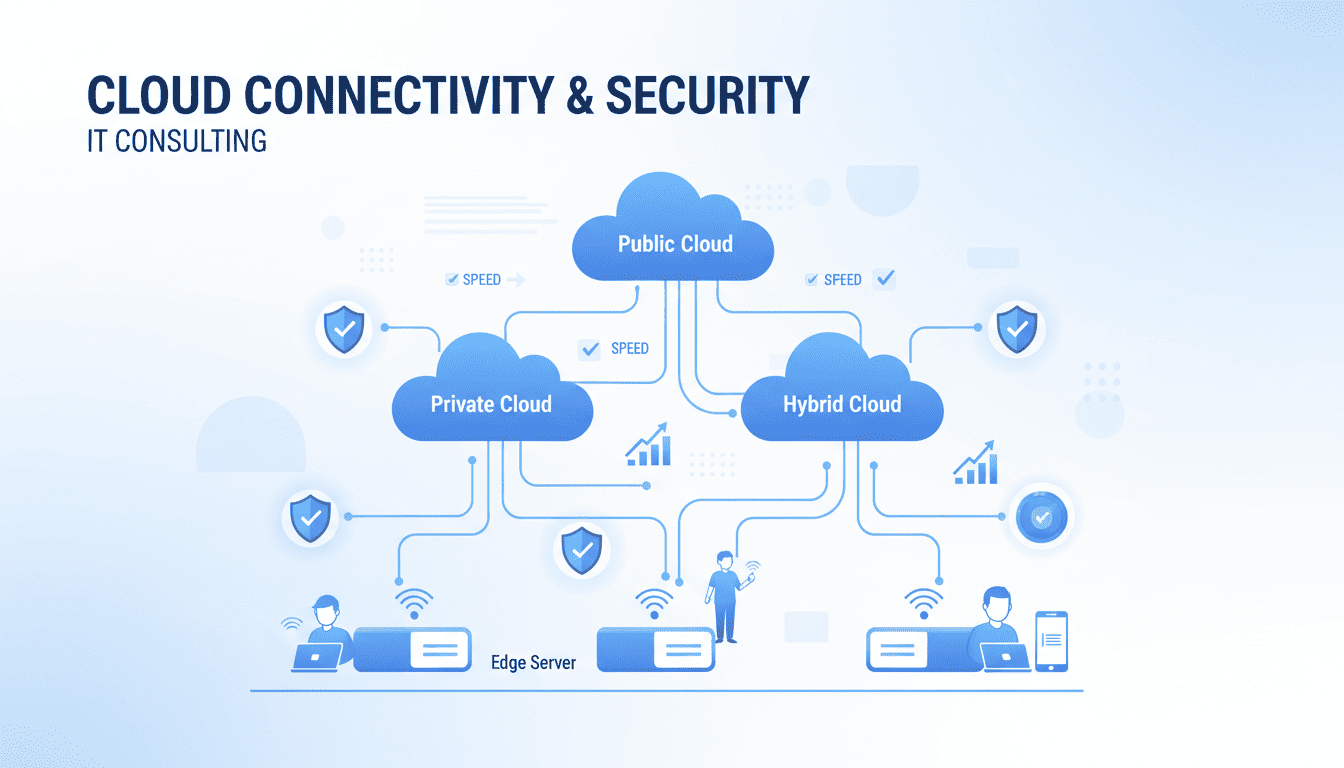
Multi-cloud hosting is the term that implies the employment of multiple cloud providers. Businesses distribute the workloads to various clouds instead of using only one platform.
For example, an enterprise can use AWS to store data and Azure to run applications. Such an arrangement enhances flexibility and risk minimization.
Also, multi-cloud assists businesses in preventing vendor lock-in. Companies have increased control over performance, costs, and security.
At Khaleejhost, we design multi-cloud strategies based on business needs. We aligns digital performance with cloud efficiency.
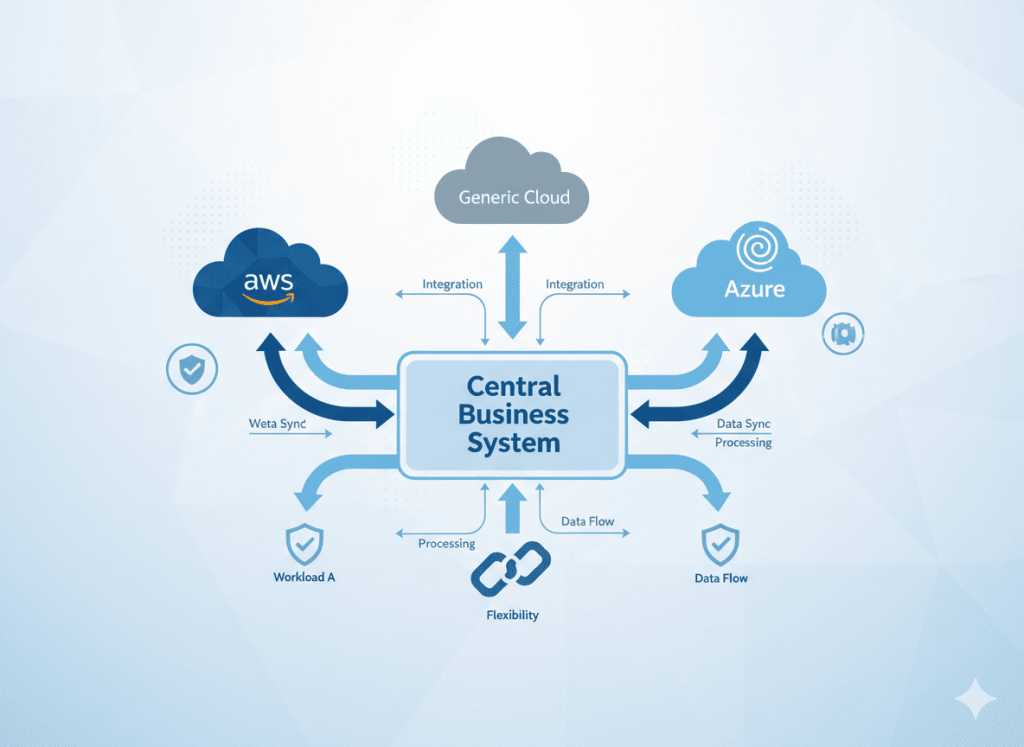
Why Businesses Are Moving to Multi-Cloud
Many companies are switching to multi-cloud environments. This shift happens because:
- One cloud provider may fail or slow down
- Pricing varies between platforms
- Different clouds offer different strengths
- Compliance rules differ by region
As a result, businesses want backup options and stronger performance. Multi-cloud ensures continuity and reliability. It improves disaster recovery and system uptime. Businesses stay online even during outages.
What Is Edge Computing?
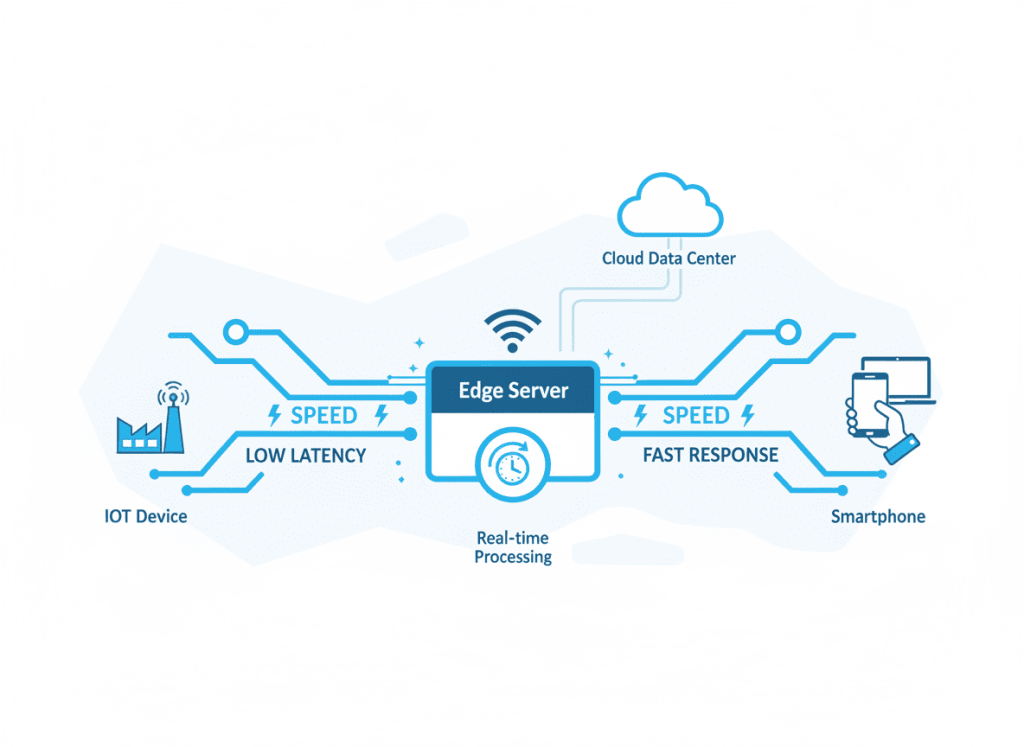
Data is computed closer to the customer through edge computing. It does not transfer data to a remote cloud server but performs information processing locally.
As an example, IoT systems, smart devices, and sensors are dependent on edge computing. This minimizes wastage of time and enhances quickness. Users can respond more quickly and perform better as a result. Applications that operate in real time are essential.
At Newton Byte, we integrate edge solutions for speed-critical systems. Digitix Marketing uses this advantage for faster digital experiences.
Why Edge Computing Matters for the Future
Edge computing supports modern digital demands. It is especially useful for:
- Real-time data processing
- Mobile applications
- Smart cities and IoT devices
- E-commerce performance
- Video streaming and gaming
Reducing bandwidth consumption is one of edge computing’s other benefits. Less data travels to central servers, lowering costs. Businesses gain faster systems and better customer satisfaction.
How Multi-Cloud and Edge Computing Work Together
Multi-cloud and edge computing are not competitors. Instead, they work together to improve performance.
Edge computing handles local processing. Multi-cloud manages large workloads and backups.
Together, they provide speed, flexibility, and reliability. Businesses can scale faster while keeping systems stable.
At Newton Byte, we combine both technologies for optimized cloud architecture. Digitix Marketing then ensures seamless digital performance.
Benefits for Businesses in 2026 and Beyond
The future of cloud hosting focuses on user experience and resilience. Key benefits include:
- Faster application performance
- Reduced downtime and failures
- Better data security and control
- Lower infrastructure risks
- Improved scalability
Additionally, businesses gain a competitive advantage. Faster systems lead to better customer engagement.
Security and Compliance in Modern Cloud Hosting
Security remains a top concern. However, multi-cloud improves protection by spreading risk.
If one cloud is compromised, others remain safe. Also, edge computing limits data movement, reducing exposure.
At Newton Byte, we implement secure cloud frameworks. Digitix Marketing ensures trust and compliance across digital platforms.
Challenges of Multi-Cloud and Edge Computing
While powerful, these technologies require expertise. Common challenges include:
- Complex system management
- Higher planning requirements
- Skilled workforce needs
- Integration difficulties
Therefore, professional guidance is essential. Without strategy, systems may become inefficient. Both Newton Byte and Digitix Marketing help businesses avoid these issues through structured planning.
Why the Future Belongs to Hybrid Cloud Models
- The future does not lie in single-cloud and on-premise. It is hybrid and flexible.
- Multi-cloud guarantees options and security. Edge computing provides real-time processing and speed.
- They are collectively in favor of contemporary digital transformation. Companies that embrace the early technological advances will remain on top.
Conclusion
Cloud hosting has a smart, fast, and flexible future. Multi-cloud and edge computing are not options anymore. Modern businesses cannot do away with them.
Newton Byte offers effective cloud infrastructures. Digitix Marketing creates digital growth that is scalable and consistent with performance.
With the adoption of such technologies, businesses are able to:
- Improve system speed
- Increase reliability
- Improve customer experience.
- Prepare for future growth
FAQs – Multi-Cloud and Edge Computing
Multi-cloud hosting refers to the combination of several cloud providers. It enhances flexibility, minimizes risks of downtimes, and saves dependence on a single vendor. Businesses have superior control and security as well as performance across platforms.
Edge computing sends data to users. This saves time and improves response times. It is best suited for real-time applications like IoT, mobile apps, and online services that require fast data processing.
Multi-cloud is more flexible and reliable. It is less vulnerable to downtime and fluctuations in pricing, unlike single cloud hosting. To get the best results, it should be planned and managed.
Yes. Faster websites and applications are beneficial to small businesses. E-commerce and mobile-based services are some of the applications for which edge computing enhances user experience and minimizes server load.
Newton Byte develops scalable and secure cloud architecture designs. Digitix Marketing also complies with digital growth objectives, like speed, reliability, and long-term success through cloud performance.